
The quest for clean, renewable energy sources has never been more urgent. As we seek to reduce our carbon footprint and move away from fossil fuels, innovative technologies are emerging to harness the power of nature. Among these, wind energy stands out as a promising solution, and within the realm of wind energy, a particular design has garnered attention, the vertical axis wind mill.
Understanding Vertical Axis Wind Mills
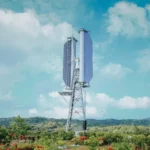
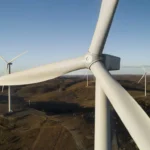
What exactly is a vertical axis wind mill, and how does it differ from the more familiar horizontal axis turbine? The key distinction lies in the orientation of the rotor shaft. In a horizontal axis wind turbine, the rotor shaft is, well, horizontal, resembling a traditional windmill. These turbines must be pointed into the wind, often using a yaw mechanism. In contrast, a vertical axis wind mill has its rotor shaft oriented vertically, perpendicular to the ground.
This seemingly simple difference in design has profound implications for the turbine’s characteristics and applications. One key advantage of the vertical axis design is its omnidirectional nature. It can accept wind from any direction without needing to be actively steered. Think about it, no matter which way the wind blows, the turbine is ready to capture its energy. This simplifies the design and reduces the complexity of the control system.
There are several types of vertical axis wind mills, each with its unique design and operating principles. The two most common are the Darrieus turbine, characterized by its curved blades resembling an eggbeater, and the Savonius turbine, which uses scooped blades to capture the wind. The Darrieus is generally more efficient, while the Savonius is simpler and can start up at lower wind speeds.
Advantages of Vertical Axis Wind Mills
Why are vertical axis wind mills gaining traction as a sustainable energy solution? Several factors contribute to their appeal.
-
Omnidirectional Wind Capture, As mentioned earlier, the ability to accept wind from any direction is a significant advantage. This eliminates the need for complex yaw mechanisms and allows the turbine to operate efficiently in turbulent wind conditions, which are often encountered in urban environments.
-
Lower Noise Levels, Vertical axis wind mills tend to be quieter than their horizontal axis counterparts. This is due to their lower rotational speeds and the absence of a gearbox, which can generate noise in horizontal axis turbines. Quieter operation is particularly important for installations in residential areas or near sensitive ecosystems.
-
Reduced Visual Impact, The smaller size and simpler design of vertical axis wind mills can make them less visually intrusive than large horizontal axis turbines. This can be a significant advantage in areas where aesthetics are a concern. Imagine a city skyline dotted with sleek, unobtrusive turbines instead of towering structures.
-
Ease of Maintenance, The placement of the generator and other components near the ground simplifies maintenance and repair. Technicians don’t need to climb tall towers to access critical equipment. This reduces maintenance costs and increases the overall lifespan of the turbine.
-
Scalability, Vertical axis wind mills can be scaled to various sizes, making them suitable for a wide range of applications. Small turbines can power individual homes or businesses, while larger turbines can contribute to grid-scale electricity generation.
Applications of Vertical Axis Wind Mills
The versatility of vertical axis wind mills makes them suitable for diverse applications, offering tailored solutions for unique energy needs.
-
Urban Environments, Their ability to operate in turbulent wind conditions, combined with their lower noise levels and reduced visual impact, makes them ideal for urban installations. Imagine small turbines mounted on rooftops or integrated into building facades, generating clean energy for city dwellers.
-
Off-Grid Power, Vertical axis wind mills can provide a reliable source of power in remote locations where access to the electricity grid is limited. They can be used to power homes, businesses, or community facilities in areas where traditional power sources are unavailable or unreliable.
-
Distributed Generation, Vertical axis wind mills can be integrated into distributed generation systems, where electricity is generated close to the point of use. This reduces transmission losses and improves the overall efficiency of the electricity grid.
-
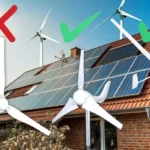
Hybrid Systems, They can be combined with other renewable energy sources, such as solar panels, to create hybrid systems that provide a more consistent and reliable power supply. Imagine a system that uses solar power during the day and wind power at night, ensuring a continuous flow of clean energy.
Addressing Challenges and Future Prospects
While vertical axis wind mills offer numerous advantages, they also face certain challenges. Historically, they have tended to be less efficient than horizontal axis turbines, although recent advances in design and materials are improving their performance. Their reliability in harsh weather conditions also presents some concerns.
However, ongoing research and development efforts are addressing these challenges and paving the way for wider adoption of vertical axis wind mills. Advances in blade design, materials science, and control systems are improving their efficiency, durability, and cost-effectiveness.
As the demand for clean, renewable energy continues to grow, vertical axis wind mills are poised to play an increasingly important role in our energy future. With their unique advantages and ongoing technological advancements, they offer a promising path towards a more sustainable and resilient energy system. Can you envision a future powered by the gentle hum of these innovative machines?