
The quest for clean, renewable energy sources has led to innovations that constantly reshape our understanding of power generation. Among these, vertical windmills, also known as Vertical Axis Wind Turbines (VAWTs), are experiencing a surge in interest. But what makes them different, and why are they garnering so much attention in the sustainable energy landscape?
Understanding Vertical Windmill Technology
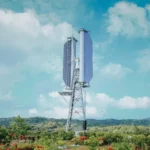
Traditional horizontal axis wind turbines (HAWTs), the type we most commonly associate with wind farms, have blades that rotate around a horizontal axis. These giants, while efficient, present challenges related to size, noise, and visual impact. Vertical windmills, on the other hand, feature blades that rotate around a vertical axis. Think of a revolving door, and you’re getting closer to visualizing the concept.
Several designs exist within the vertical windmill category. The Darrieus turbine, resembling an eggbeater, and the Savonius turbine, which looks like two scoops facing opposite directions, are among the most prevalent. Each design boasts its own set of advantages and drawbacks.
The Savonius type, for example, excels at starting up in low wind speeds, making it suitable for areas with inconsistent wind patterns. However, it generally has lower efficiency compared to the Darrieus design. Darrieus turbines, while more efficient, typically require assistance to start rotating.
So, what benefits do these designs bring to the table?
Advantages of Vertical Windmills
-
Omnidirectional Wind Capture − One key advantage is their ability to accept wind from any direction. Unlike HAWTs that must be actively yawed (turned) to face the wind, vertical windmills capture wind from all directions without needing adjustment. This simplifies their design and reduces mechanical complexity.
-
Lower Noise Levels − Studies suggest that they generally produce less noise than their horizontal counterparts. This makes them more palatable for urban or residential settings where noise pollution is a concern.
-
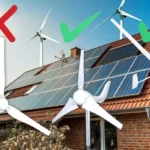
Scalability and Integration − VAWTs can be scaled down more easily than HAWTs, making them suitable for small-scale applications such as powering individual homes or businesses. Their compact size also allows for integration into existing infrastructure, like building rooftops or along highways.
-
Reduced Visual Impact − Their smaller size and sleeker designs can make them less visually obtrusive compared to the towering HAWTs. This can be a significant factor in gaining public acceptance for wind energy projects.
-
Potential for Higher Turbine Density − Due to the way they interact with the wind, some believe VAWTs can be placed closer together in wind farms than HAWTs. This could potentially increase the power output per unit area. However, this is still an area of ongoing research and debate.
Challenges and Considerations
Despite their advantages, vertical windmills also face challenges that must be addressed for wider adoption.
-
Efficiency − Historically, VAWTs have generally been less efficient than HAWTs, especially in large-scale applications. However, advancements in design and materials are constantly closing this gap.
-
Structural Integrity − The cyclic stress experienced by the blades of some VAWT designs, particularly the Darrieus turbine, can lead to fatigue and potential structural failure. Robust engineering and advanced materials are crucial to ensure long-term reliability.
-
Cost − The initial cost of VAWT systems can sometimes be higher than comparable HAWT systems, particularly when considering the entire lifecycle cost. However, as technology matures and production scales up, prices are expected to become more competitive.
-
Research and Development − Continued research and development are essential to improve the efficiency, reliability, and cost-effectiveness of VAWT technology. This includes exploring new designs, materials, and control systems.
The Future of Vertical Wind Energy
Despite the challenges, the future looks promising for vertical wind energy. Innovations in materials science, aerodynamics, and control systems are paving the way for more efficient and reliable VAWTs. As the demand for clean, distributed energy solutions grows, vertical windmills are poised to play an increasingly important role.
Imagine a future where homes and businesses are powered by small, quiet wind turbines integrated into their buildings. Picture highways lined with VAWTs generating electricity from passing traffic. These scenarios are becoming increasingly plausible as VAWT technology advances and costs decline.
Are vertical windmills the answer to all our energy needs? Probably not, no single technology holds all the keys. But they represent a valuable piece of the puzzle, offering a viable alternative to traditional wind energy solutions, especially in urban and distributed generation settings. Their unique advantages, combined with ongoing research and development, suggest that we will see a continued rise in the use of this innovative technology in the years to come. The wind of change is certainly blowing in their direction.