
The quest for sustainable energy sources continues unabated, and among the myriad of options, wind power stands out as a frontrunner. But when you think of wind turbines, do you automatically picture those towering, three-bladed giants that dot the landscape? What if I told you there’s another contender, a design that’s not only visually different but offers its own unique set of advantages? Let’s talk about vertical axis windmills, a technology that’s quietly revolutionizing how we harness the wind’s energy.
Understanding the Basics of Vertical Axis Windmills
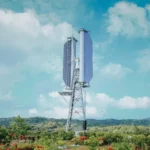
So, what are these vertical axis windmills exactly? Unlike their horizontal counterparts, these turbines feature blades that rotate around a vertical axis, like a merry-go-round. This fundamental difference in design translates into a host of benefits, and yes, some drawbacks too.
One of the most significant advantages is their omnidirectional nature. Horizontal axis turbines need to be actively pointed into the wind using a yaw mechanism, while vertical axis windmills capture wind from any direction. Imagine a blustery day with winds shifting constantly. A horizontal turbine would be constantly adjusting, whereas the vertical axis version just keeps spinning. This simplifies the design, reduces wear and tear, and, ultimately, lowers maintenance costs.
Furthermore, the generator and gearbox, the heaviest components of the system, can be located at ground level. This makes installation and maintenance easier and safer. Think about it, no need to hoist heavy equipment hundreds of feet in the air. That’s a definite plus.
But it’s not all sunshine and windmills. Vertical axis windmills generally have a lower efficiency compared to horizontal axis turbines, meaning they extract less energy from the wind for a given rotor size. They can also be more prone to vibration and fatigue, particularly at higher wind speeds. Early designs suffered from reliability issues, but advancements in materials and engineering are steadily addressing these concerns.
The Darrieus and Savonius Designs
Within the realm of vertical axis windmills, two main designs dominate the landscape the Darrieus and the Savonius. Understanding their differences is key to appreciating the versatility of this technology.
The Darrieus turbine, named after its French inventor Georges Darrieus, features curved blades that resemble an eggbeater. These blades are aerodynamically efficient, allowing for high rotational speeds and greater power output. However, Darrieus turbines are not self-starting, meaning they require an external power source to initiate rotation. They also tend to be noisier than other designs.
The Savonius turbine, on the other hand, employs a simpler design with scooped blades that catch the wind. These turbines are self-starting, even in low wind conditions, making them ideal for applications where reliability is paramount. However, they are less efficient than Darrieus turbines and generally produce less power for their size.
Which design is better? It depends entirely on the application. Darrieus turbines might be preferred for large-scale wind farms, while Savonius turbines could be a better choice for small-scale, off-grid power generation.
Transforming Renewable Energy Solutions
So, how are vertical axis windmills changing the renewable energy landscape? While they haven’t yet achieved the widespread adoption of horizontal axis turbines, they are carving out a niche for themselves in specific applications.
Urban environments, for example, present a unique set of challenges for wind power. Tall buildings create turbulent wind conditions that can wreak havoc on horizontal axis turbines. Vertical axis windmills, with their ability to accept wind from any direction, are better suited to these chaotic environments. Imagine smaller, more aesthetically pleasing turbines integrated into building designs, silently generating clean energy in the heart of the city.
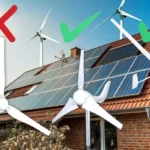
Furthermore, vertical axis windmills are finding applications in remote areas and off-grid locations. Their simpler design and lower maintenance requirements make them attractive for providing power to isolated communities or powering remote sensors and monitoring equipment. They can also be integrated with other renewable energy sources, such as solar panels, to create hybrid systems that provide a reliable power supply, regardless of weather conditions.
The future of vertical axis windmills looks promising. Ongoing research and development efforts are focused on improving their efficiency, reducing their cost, and enhancing their reliability. New materials, advanced aerodynamic designs, and smart control systems are all contributing to the advancement of this technology.
Will vertical axis windmills completely replace horizontal axis turbines? Probably not. But they offer a valuable alternative, a complementary technology that can help us diversify our energy sources and accelerate the transition to a cleaner, more sustainable future. It’s not about one design being superior, but about choosing the right tool for the job, and in many situations, the vertical axis windmill is proving to be the perfect fit.