
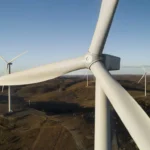
Harnessing the wind’s power has captivated humankind for centuries. From the ancient sails propelling ships across oceans to the towering horizontal axis wind turbines (HAWTs) dotting modern landscapes, we’ve constantly sought better methods to capture this clean energy source. But what about a different direction? What if we reimagined the wind turbine itself? Enter the world of vertical axis wind turbine designs, a field bursting with ingenuity and the promise of revolutionizing renewable energy.
Understanding Vertical Axis Wind Turbines
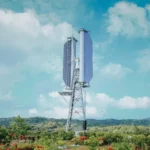
Unlike their horizontal cousins, vertical axis wind turbines (VAWTs) possess a rotor shaft oriented vertically. This seemingly simple change unlocks a world of advantages. Think about it – HAWTs need to constantly adjust to face the wind, a process that requires sensors, motors, and complex control systems. VAWTs, on the other hand, accept wind from any direction. This omnidirectional capability simplifies construction, reduces maintenance, and makes them ideal for turbulent wind environments, such as urban areas.
But why aren’t VAWTs as prevalent as HAWTs? Historically, VAWTs faced challenges in terms of efficiency and scalability. Early designs struggled to compete with the energy production of large HAWTs. However, recent advancements in materials science, aerodynamics, and control systems have sparked a renaissance in VAWT technology.
Innovative Designs Reshaping the Landscape
What makes these new designs so special? It’s a combination of clever engineering and a dedication to overcoming past limitations. Let’s delve into some of the most promising vertical axis wind turbine designs –
-
Darrieus Turbines – Named after Georges Darrieus, this design features curved blades resembling an eggbeater. Darrieus turbines are known for their high rotational speeds and potential for high efficiency. Modern iterations are incorporating advanced blade profiles and control systems to address issues with self-starting and structural integrity. Can you imagine these elegant, curved structures gracing city skylines?
-
Savonius Turbines – These turbines utilize a drag-based design, with blades shaped like scoops that catch the wind. Savonius turbines are robust, simple to manufacture, and excel at low wind speeds. While generally less efficient than Darrieus turbines, they are ideal for applications requiring high torque, such as water pumping or off-grid power generation. Picture small Savonius turbines providing electricity to remote communities, a testament to their reliability and adaptability.
-
Hybrid Designs – What if we combined the strengths of different VAWT designs? Hybrid turbines seek to do just that, often integrating Darrieus and Savonius elements. This approach can yield turbines that are both efficient and capable of self-starting in low winds. These hybrid models represent a new frontier in VAWT development, pushing the boundaries of what’s possible.
-
Airfoil Innovations – The shape of the blades is crucial to a turbine’s performance. Engineers are constantly experimenting with new airfoil designs that maximize lift and minimize drag. Some designs incorporate features like leading-edge slats or trailing-edge flaps, similar to those found on aircraft wings, to improve aerodynamic efficiency. This attention to detail is unlocking new levels of performance for VAWTs.
-
Magnus Effect Turbines – This less common design utilizes the Magnus effect, a phenomenon where a rotating cylinder in an airflow experiences a force perpendicular to both the airflow and the axis of rotation. Magnus effect turbines are relatively new to the scene, but they hold promise for high efficiency and reduced noise.
The Future of Vertical Axis Wind Turbines
The evolution of vertical axis wind turbine designs is far from over. Ongoing research and development efforts are focused on addressing key challenges, such as improving efficiency, reducing manufacturing costs, and enhancing grid integration.
So, what does the future hold for VAWTs? We can anticipate –
-
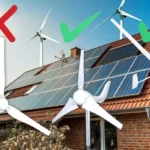
Increased Urban Integration – VAWTs’ ability to operate in turbulent winds makes them well-suited for urban environments. Imagine VAWTs mounted on rooftops or integrated into building facades, generating clean energy directly where it’s needed.
-
Offshore Applications – VAWTs’ simplified construction and maintenance requirements could make them attractive for offshore wind farms, especially in deep-water locations.
-
Microgeneration Solutions – Small-scale VAWTs could provide decentralized power for homes, businesses, and remote communities, reducing reliance on centralized power grids.
-
Material Advancements – The use of lightweight, high-strength materials, such as composites, will further improve the performance and durability of VAWTs.
The wind whispers a promise of clean energy. Through continued innovation and a commitment to sustainable solutions, vertical axis wind turbine designs are poised to play a significant role in shaping a cleaner, more resilient energy future. The possibilities are as limitless as the wind itself.